

Coffee grind size guide: the right grind for every brewer
Published on 01/11/2026, 7 min read
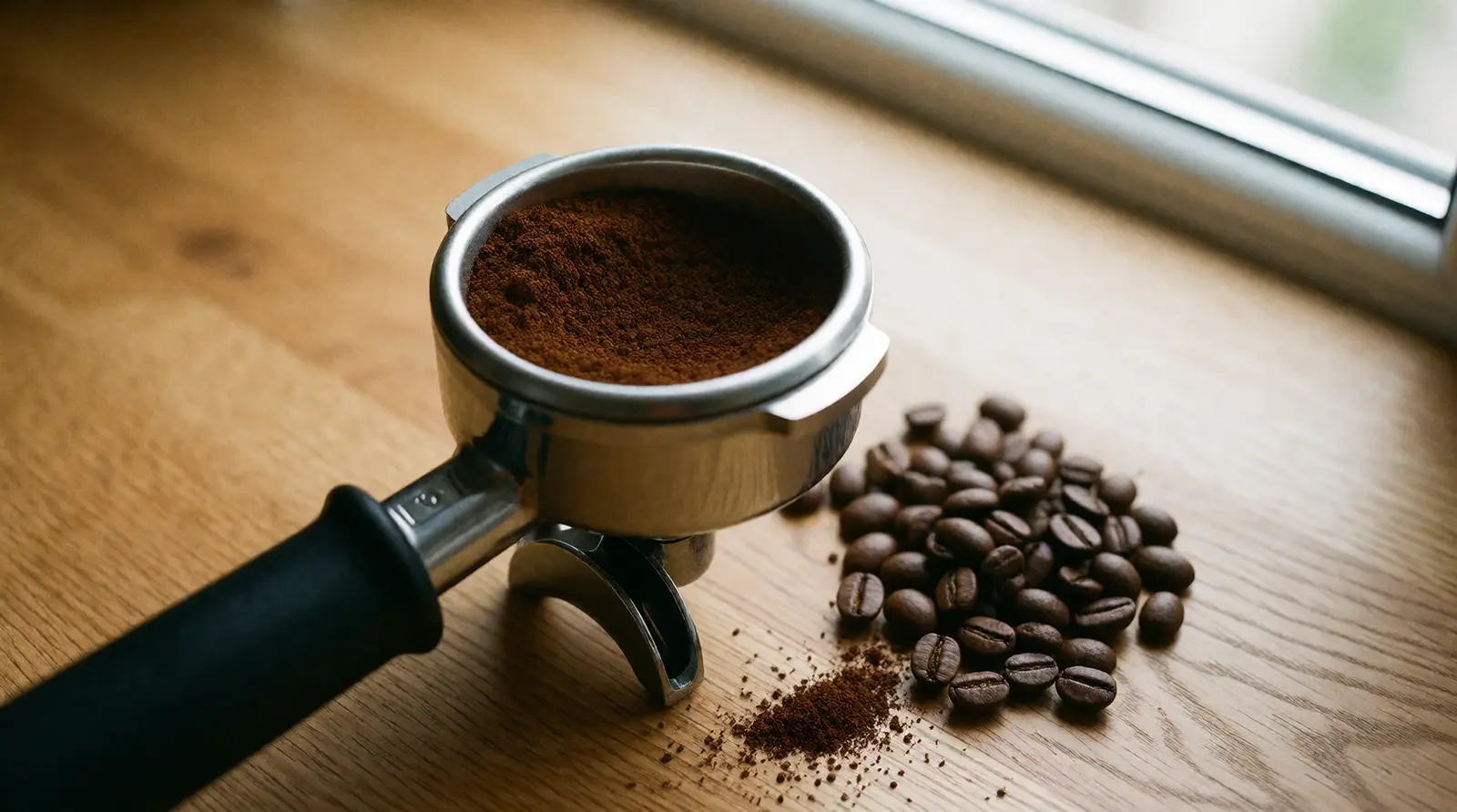
The wrong coffee grind size can ruin even great coffee. Too fine, and it turns bitter. Too coarse, and it tastes flat and sour. Here is how to choose the right grind size for your brewer, and how to adjust it when the taste is off.
What is coffee grind size?
Grind size is the size of the coffee particles once the beans are ground. It ranges from a very fine powder, almost like flour, to pieces as big as coarse salt.
This size is not a detail. It decides how quickly the water pulls the flavours out of the coffee. Each brewing method has its own grind, because each method keeps the water in contact with the coffee for a different time.
One simple rule sums it all up: the shorter the contact, the finer the grind. The longer the contact, the coarser the grind.
Why grind size changes the taste
When hot water passes through coffee, it gradually dissolves its compounds. They do not all dissolve at the same speed. To simplify: acids come out first, then sugars. Bitter and astringent compounds weigh most at the end of extraction.
A fine grind gives the water much more surface. Extraction is therefore faster. A coarse grind gives less surface, so extraction is slower. The goal is to stop at the right moment, when the cup is balanced.
Under-extraction: a sour cup
If the grind is too coarse for your method, the water flows through too fast and does not extract enough. The coffee is acidic, sometimes sour, and lacks sweetness. It tastes light and flat.
Over-extraction: a bitter cup
If the grind is too fine, the water stays in contact too long or extracts too much. The coffee becomes bitter and harsh, and leaves a dry feeling in the mouth. The delicate aromas disappear behind the bitterness.
Good news: both faults are easy to fix. A small grind adjustment is often enough.
Which grind size for which method
Here is the reference chart, from finest to coarsest. Method-by-method details follow right after.
- Turkish coffee: extra fine, like flour
- Espresso: fine, close to table salt
- Moka pot: medium-fine, slightly coarser than for espresso
- AeroPress: medium-fine to medium, depending on the recipe
- V60 and pour-over: medium-fine to medium
- Electric drip coffee maker: medium
- Chemex: medium-coarse
- French press: coarse, like coarse salt
- Cold brew: coarse to extra coarse
Espresso
Espresso needs a fine grind, close to table salt. The water is pushed through under pressure in about 20 to 30 seconds. That is very short, hence the fine grind.
Espresso is very sensitive to grind. A small change of setting can clearly change the flow time. If the coffee runs too fast and looks pale, grind finer. If it drips slowly and turns very dark, grind coarser.
Moka pot
Which grind for a moka pot? A medium-fine grind, slightly coarser than for espresso. The moka pot pushes water through the coffee with steam pressure, for about 5 minutes on the stove.
A common mistake is using an espresso grind. Too fine, it slows the water down, the pot stays longer on the heat and the coffee can turn bitter. Fill the basket level, without tamping. Take the pot off the heat as soon as the coffee starts to gurgle.
For espresso as for the moka pot, a full-bodied, low-acidity coffee works well. That is the case with King, a blend of 80% arabica and 20% robusta, which also suits filter coffee.
Electric drip coffee maker
A classic drip coffee maker needs a medium grind. The coffee stays in contact with the water for about 5 minutes, depending on the amount brewed.
If the coffee drips very slowly or tastes bitter, try a slightly coarser grind. If it is light and acidic, grind a little finer.
V60 and pour-over
For a V60 or another cone dripper, aim for a medium-fine to medium grind. Brewing usually takes 2 to 4 minutes in total, bloom included.
Here, total brew time is your best guide. If the water drains in under 2 minutes, grind finer. If it stalls beyond 4 minutes, grind coarser.
Chemex
The Chemex paper filter is thick and slows the water down. The grind should therefore be medium-coarse. Allow about 4 to 5 minutes in total. A grind that is too fine slows the flow a lot and can make the coffee bitter.
French press
The French press steeps the coffee directly in the water, for about 4 minutes. It needs a coarse grind, like coarse salt, with clearly visible particles.
A grind that is too fine slips through the metal mesh. The coffee becomes muddy, cloudy and bitter. An even grind also reduces the sludge at the bottom of the cup.
AeroPress
The AeroPress is very flexible. The official recipe uses a medium-fine grind and a short steep, of about a minute. If you steep longer, move to a medium grind. The principle stays the same: the longer the steep, the coarser the grind.
Cold brew
Cold brew steeps without hot water, in the fridge or at room temperature, usually about 12 to 18 hours, sometimes longer. A coarse to extra coarse grind is ideal. It extracts slowly and stays easy to filter.
Turkish coffee
Turkish coffee calls for the finest grind of all: an extra fine powder, like flour. The coffee heats slowly with the water in a small pot, the cezve, and is not filtered: the grounds settle at the bottom of the cup. Most home burr grinders cannot reach this fineness. You need a grinder able to grind that fine, such as a hand grinder made for Turkish coffee.
Sour or bitter coffee: how to adjust the grind
The taste of your cup tells you which way to turn the dial. Proceed like this:
- Taste your coffee and note the main fault: sour and thin, or bitter and dry.
- If it is sour, grind one step finer. If it is bitter, grind one step coarser.
- Change only one variable at a time. Keep the same dose of coffee, the same amount of water and the same temperature.
- Brew a new cup and taste again.
- Repeat until you find the balance, then write down the setting for next time.
If the cup is both sour and bitter, the grind is often uneven: over-extracted fines mix with under-extracted coarse pieces. The problem then lies with the grinder.
Blade grinder or burr grinder?
A blade grinder does not really grind: it chops. The blades spin and break the beans at random. You get a mix of powder and large chunks, hard to repeat from one time to the next.
A burr grinder crushes the beans between two burrs, conical or flat, whose gap can be adjusted. The particles are far more even in size, and the setting can be repeated every time. For espresso, it is practically essential. For other methods, it is one of the best ways to improve your coffee.
A manual burr grinder is a good option for filter, moka pot or French press. It just takes a little elbow grease.
Why grind just before brewing
A whole bean protects its aromas inside. Once ground, coffee exposes far more surface to the air. It loses its gases and aromas faster, and oxidation, which makes coffee go stale, speeds up.
Pre-ground coffee therefore loses its freshness much faster than whole beans. That is why our coffees are sold as whole beans only: grind them just before brewing to keep as much aroma as possible.
Want to try several coffees with your method? The discovery pack brings together one bag each of King, Queen and Ace.
Frequently asked questions
What is the most versatile grind size?
A medium grind suits drip coffee makers and many pour-over drippers. But no grind suits every method. Espresso and French press each need their own setting.
Can I use an espresso grind in a moka pot?
You can, but it is not recommended. Too fine, it slows the water and makes the coffee bitter. Choose a slightly coarser grind and never tamp the coffee in the basket.
How long does ground coffee keep?
Ground coffee goes stale much faster than whole beans, especially once the pack is open. The best option is still to grind just before brewing.
How do I know if my grind is too fine?
The coffee tastes bitter and dry, and the water passes slowly. With espresso, the coffee drips. With a French press, the plunger is hard to push down. Grind one step coarser.