

How to use a moka pot: a step-by-step guide
Published on 12/11/2026, 6 min read
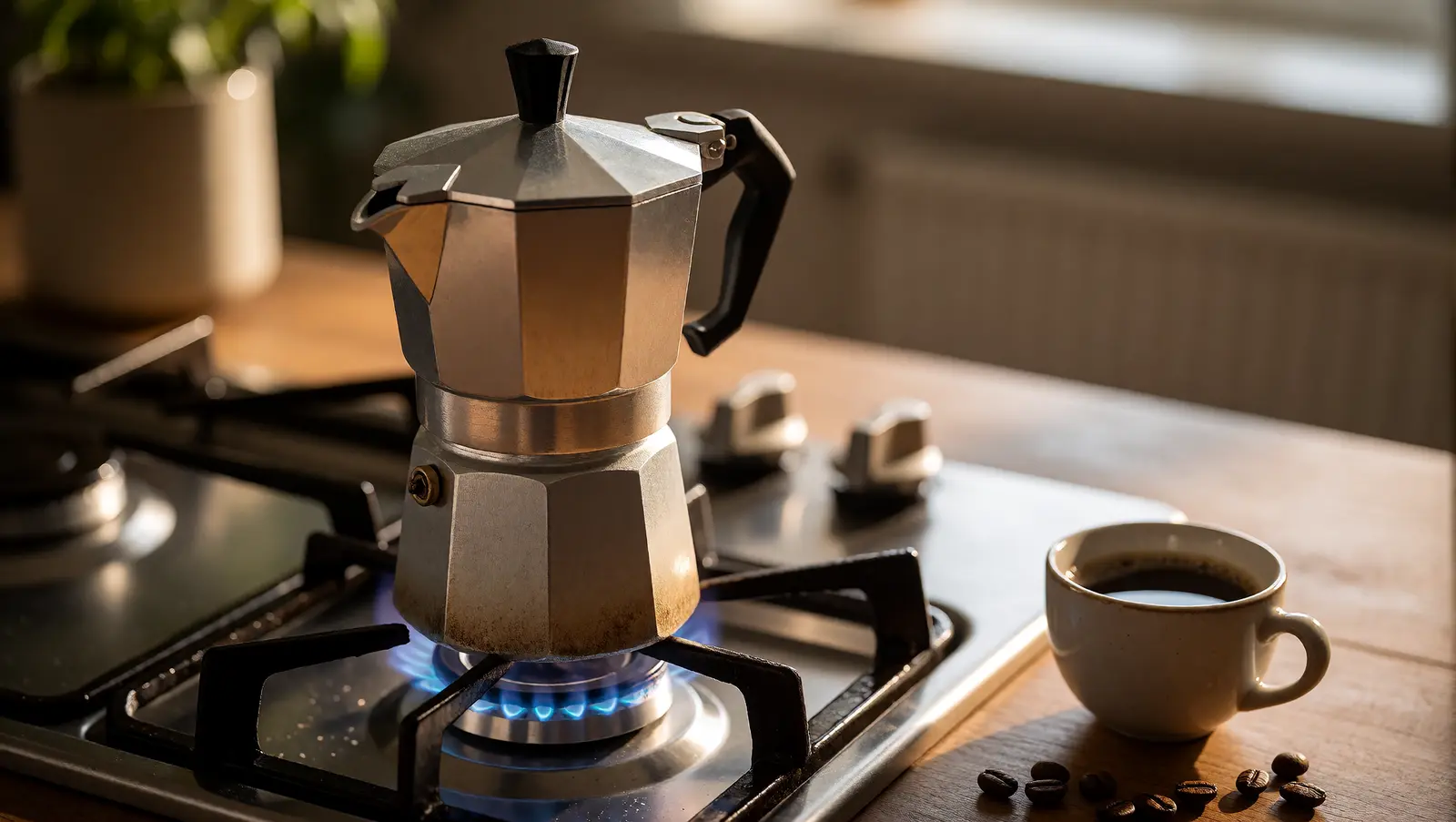
A moka pot makes short, rich, aromatic coffee in a few minutes on almost any hob. You still need to fill it properly, set the heat right and take it off at the right moment. Here is the step-by-step method, the right settings and the mistakes that make coffee bitter.
How a moka pot works
It has three parts: the base, which you fill with water, the funnel-shaped filter basket, which holds the ground coffee, and the top chamber, where the coffee ends up. As the water in the base heats up, it produces steam. The steam pressure pushes the hot water up, through the coffee, then through the central column into the top chamber.
That pressure stays low: about 1 to 2 bar, against 9 bar for an espresso machine. So the result is not espresso, even if it comes close in intensity. It is a concentrated coffee with a rich body and no real crema.
The best-known model, Bialetti's Moka Express, dates from 1933. It is also called a stovetop espresso maker.
What you need
- A moka pot sized for the number of cups you want: it is always used full.
- Coffee beans and a grinder, or coffee ground for moka pots.
- Fresh water, filtered if possible.
- A heat source: gas, electric or ceramic hob. On induction you need a stainless steel model or an adapter plate: aluminium does not heat on its own.
Which grind size?
Medium-fine: finer than for filter coffee, coarser than for espresso. It should stay grainy, not powdery.
Too fine and it slows the water down, the pot struggles to brew and the coffee tastes burnt. Too coarse and the water runs through too fast, giving pale, watery coffee. Grinding just before brewing keeps the most aroma.
How much coffee and water
No scale needed: a moka pot is dosed by volume. The water goes up to the safety valve, never above it. The coffee fills the basket to the brim, without tamping.
For a 3-cup pot, that is about 14 to 18 g of coffee depending on the model, for about 130 ml of coffee in the top chamber. The "cups" are small cups of 40 to 60 ml: a 3-cup pot fills a single large mug.
Step by step
- Grind the coffee medium-fine, just before brewing.
- Fill the base with water up to the valve, not above.
- Put the basket in and fill it with coffee to the brim. Level it with your finger, without tamping.
- Wipe any coffee off the rim: a few grounds are enough to stop the seal closing properly.
- Screw the top on firmly while holding the base, not the handle.
- Put it on a low heat. On gas, the flame must not reach beyond the base.
- Let the coffee rise. With the lid open, you can see how it is going.
- As soon as you hear the gurgling, take the pot off the heat.
- Stir the coffee in the top chamber with a teaspoon, then serve straight away.
Why stir? The first coffee to come up is stronger than the last. Stirring mixes them for an even cup.
Why stop at the gurgle? By then, the water in the base is almost gone. Leaving the pot on the heat over-extracts the coffee and brings bitter, unpleasant flavours.
Cold or hot water in the base?
Bialetti says cold water. Many baristas, including Britain's James Hoffmann, start with water that is already hot: the pot brews faster and the coffee spends less time on the heat, which limits bitterness.
If you try it, heat the water in the kettle, pour it into the base and screw the top on with a tea towel: the metal gets very hot. Taste both versions with the same coffee and keep the one you prefer.
The most common problems
The coffee is bitter or tastes burnt
Heat too high, grind too fine, or the pot left on the heat after the gurgle. Lower the heat, grind a little coarser and take the pot off sooner.
The coffee is pale and flavourless
Basket not full enough or grind too coarse. Fill the basket to the brim and grind a little finer.
The coffee does not rise, or rises very slowly
Grind too fine or coffee tamped: the water can no longer get through. Grind coarser and never tamp. If nothing rises at all, take the pot off the heat and let it cool before opening it.
It leaks between the two halves
Not screwed tight, coffee on the rim, or a worn gasket. Clean the rim, screw it firmly and replace the gasket if it is hard or cracked.
A new pot tastes metallic
That is common at first. Before your first real cup, wash it in hot water, then brew one to three pots and throw them away, as the manufacturer advises.
Care: what to do and what to avoid
- Rinse all the parts in hot water after use, without washing-up liquid.
- Never put an aluminium pot in the dishwasher: it gets damaged and the taste of the coffee changes.
- Dry each part well before putting the pot back together, to avoid oxidation.
- No abrasive sponges or steel wool.
- Check the gasket, the filter plate and the funnel from time to time: they wear out and can be replaced.
- Never heat the pot empty.
For a stainless steel model, follow its manual: some accept a little mild washing-up liquid.
Metal filter or paper filter: a difference worth knowing
The metal filter of a moka pot lets the coffee's oils through, unlike a paper filter. They give the coffee its body. They also contain cafestol, a compound that can raise cholesterol in heavy drinkers of unfiltered coffee. If your doctor is watching your cholesterol, alternate with filter coffee.
Which coffee for a moka pot
Any coffee beans will work: the choice depends on what you like in the cup. King, our blend of 80% arabica and 20% robusta, is full-bodied, low in acidity and long on the palate. The robusta gives it body, and it suits the moka pot very well.
Prefer something softer? Ace, a pure arabica from the Cerrado in Brazil, is round and cocoa-like, with little acidity. For more liveliness, Queen, 100% arabica, has a marked acidity and notes of caramel and forest fruits.
In short
- Medium-fine grind, ground just before brewing.
- Water up to the valve, coffee to the brim without tamping.
- Low heat, flame no wider than the base.
- Off the heat at the gurgle, stir, serve.
- Rinse with water, no soap or dishwasher.